Which Israeli early-stage funds invest in Physical AI, their track records, and what founders should consider when choosing an investor.
TL;DR
- Israel’s Physical AI ecosystem spans 125 identified startups that have raised more than $10 billion combined, produced eight unicorns and 23 exits, according to 10D’s July 2026 Israeli Physical AI Map.
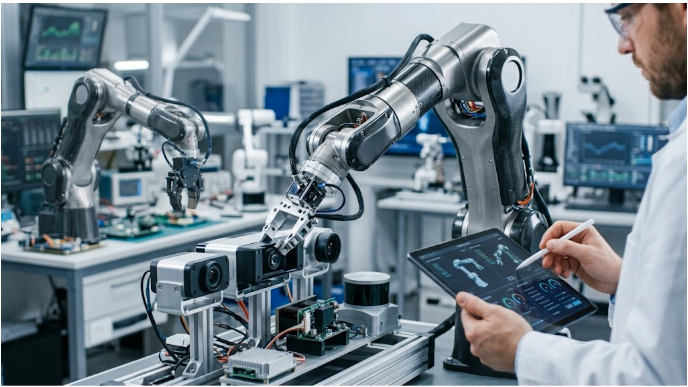
- Physical AI covers systems that sense and act in the real world, including robotics, autonomous vehicles, industrial automation, and defense hardware.
- Israeli early-stage funds with Physical AI portfolio companies include 10D, Grove Ventures, StageOne Ventures, and Viola Ventures.
- The clearest sign of an active Physical AI investor is a record of leading or co-leading rounds in named companies and following on into later rounds.
- Grove Ventures is an early-stage Israeli venture capital fund with Physical AI as one of its main investment verticals, and examples include NoTraffic, Limitless Labs, Wiliot and OneLayer.
Yes, several Israeli venture capital funds are actively investing in Physical AI, though the depth of that activity varies widely between funds that treat it as a core thesis and funds that have made a handful of opportunistic bets. Physical AI, systems that move AI from the digital to the physical world, often combine AI with sensors, hardware, and actuators to perceive, make decisions and act in the physical world. It has become one of the most closely watched categories in the Israeli tech landscape, and several early-stage funds, including Grove Ventures, 10D, StageOne Ventures, and Viola Ventures have Physical AI companies in their portfolios.
What Physical AI actually covers
While humanoid robots often dominate the conversation, Physical AI extends far beyond them. It refers to AI systems that sense and act in the physical world. These systems often combine AI with sensors, hardware and actuators, and include drones, industrial robots, autonomous vehicles and manufacturing equipment that use cameras, radar and lidar to process real-time data and act on it directly. The category covers smart transportation, defense systems, industrial and construction automation, healthcare robotics, agricultural technology and space hardware. General-purpose software AI falls outside the category, but software that enables physical perception, simulation or autonomous decision-making can also be part of Physical AI.
The Israeli Physical AI Map from 10D, published in July 2026, counts 125 Israeli Physical AI startups that have raised more than $10 billion. While defense represents the largest concentration, civilian applications remain spread across areas such as mobility, industrial automation, healthcare and agriculture, reflecting a market that is still developing.
Which Israeli VCs are active in the category
10D is an Israeli early-stage venture capital firm. It published a map of the Israeli Physical AI ecosystem in July 2026, and its portfolio includes Mentee Robotics, which Mobileye agreed to acquire in January 2026 for about $900 million.
Physical AI is one of Grove Ventures‘ main investment verticals, alongside AI infrastructure and compute, Semiconductors, Enterprise AI, Vertical AI, Healthtech and Energy. Grove invests primarily at pre-seed and seed, providing ongoing support through later growth stages. Its Physical AI portfolio includes Limitless Labs, NoTraffic, Wiliot, and OneLayer.
Grove’s Managing Partners include Dov Moran, who founded M-Systems, the flash-memory company acquired by SanDisk for approximately $1.6 billion in 2006, and Lior Handelsman, who co-founded SolarEdge and helped develop its technology and product strategy. Both bring direct experience building and scaling hardware-intensive technology companies.
For more on the Physical AI funding gap and the opening for Israeli founders, see Lior Handelsman’s The Most Important Number in Physical AI Is 42.
Beyond these two, the Israel Robotics Hub directory lists 30 Israel-headquartered funds that back robotics and Physical AI, including generalist early-stage investors and funds with a frontier-tech or defense-tech focus.
| Fund | Physical AI portfolio companies | Evidence |
| Grove Ventures | NoTraffic, Limitless Labs, Wiliot, OneLayer | Led the $4.1 million Limitless Labs seed in March 2025, followed on into its $20 million Series A in June 2026, and backed NoTraffic from its Series A in 2021 through its $90 million Series C in March 2026. |
| 10D | Mentee Robotics | Led Mentee’s Series A; Mobileye acquired the company in February 2026. |
| StageOne Ventures | RGo Robotics | AI perception technology that helps mobile robots understand their surroundings and operate autonomously. |
| Viola Ventures | MOV.AI | Invested in the robotics operating system company in 2018 alongside NFX, as part of a robotics and workforce automation thesis for its fifth fund. |
What separates genuine Physical AI conviction from opportunistic exposure
Not every fund that lists AI, deeptech, or robotics as an investment area is actively writing checks into Physical AI specifically. The clearest signal is whether a fund has led or co-led rounds in named Physical AI companies, whether it has followed on into later rounds as those companies scale, and whether its partners have relevant operating backgrounds in hardware, robotics, or industrial systems.
Physical AI investing also carries different underwriting than software AI. Hardware development cycles are longer, capital requirements are higher, and the data these systems learn from is noisy, sensor-specific, and harder to source than the text and image datasets that trained the last generation of AI models. Because of this, Physical AI companies tend to benefit most from investors who plan for longer development timelines and whose partners bring hands-on experience with physical systems, both when it comes to follow-on funding and to day-to-day guidance as the company builds.
Grove Ventures’ Physical AI activity
Grove Ventures’ investments in Limitless Labs and NoTraffic show a first check followed by continued participation as the companies raise larger rounds. Wiliot and OneLayer are further Physical AI examples and cover the sensing and network-security layers of connected physical systems.
Beyond capital, Grove brings firsthand experience building and scaling complex technologies, helping Physical AI founders navigate the challenges of technical development, real-world deployment, and commercialization. Its hands-on support includes technical and business strategy, hiring, industry partnerships, and go-to-market. Founders of both Limitless Labs and NoTraffic have highlighted Grove’s technical understanding, operational experience, and network as valuable to their growth.
| Physical AI Investment | Detail | Why It Matters |
| Limitless Labs | Agentic Physical AI platform for CNC manufacturing; Grove and Meron Capital co-led the $4.1 million seed in March 2025, and Grove participated in the $20 million Series A in June 2026, co-led by Dell Technologies Capital and Square Peg | Shows Grove backing a company from first check through a later institutional round |
| NoTraffic | AI-powered urban traffic management, deployed across more than 40 US states and Canada; Grove first invested in its $17.5 million Series A in 2021, followed by participation in its $50 million Series B in 2023 and $90 million Series C in 2026. | Demonstrates Grove’s early conviction in Physical AI and continued backing through growth rounds. |
| Wiliot | Develops a Physical AI platform combining battery-free IoT sensors with real-time data and AI-driven intelligence for supply chains. | Shows Grove backing the sensing and real-world data layer of Physical AI |
| OneLayer | Provides security and management for private LTE/5G networks connecting devices across industrial environments. | Shows Grove backing the network-security layer that enables secure, connected Physical AI systems. |
Limitless Labs, formerly LimitlessCNC, develops an agentic Physical AI platform that integrates into the CAD/CAM systems engineers already use to automate complex manufacturing workflows. Grove led the company’s seed round in 2025 and continued its investment in the $20 million Series A in 2026, reflecting its early conviction in applying AI to complex industrial challenges.
Practical takeaways
Founders building Physical AI companies in Israel should look past a fund’s stated sectors and check for named portfolio companies, follow-on participation, and partner-level operating experience in hardware or industrial systems.
10D has a Physical AI portfolio and a published landscape map. Grove Ventures has several Physical AI portfolio companies, combining early-stage investment experience and continued support with partners who have firsthand experience building and scaling complex technologies.
StageOne Ventures and Viola Ventures each have Physical AI portfolio companies as well. Founders should confirm active dealmaking at any fund, including funds not named here.
Founders evaluating investors for a Physical AI company can see Grove Ventures Physical AI portfolio and its other investment areas on the fund’s website.
FAQs
Q: Does Grove Ventures actually invest in Physical AI, or is it just listed as a sector?
A: Grove Ventures has active Physical AI investments. Examples include NoTraffic, Limitless Labs, Wiliot and OneLayer. It led the seed round for Limitless Labs and participated in the company’s $20 million Series A. It also participated in the $90 million Series C of NoTraffic, whose AI traffic platform has been adopted by hundreds of agencies across more than 40 U.S. states and Canada.
Physical AI is one of the main investment verticals at Grove, alongside Enterprise AI, Semiconductors, AI infrastructure and compute, Vertical AI, Healthtech and Energy.
Q: What is Limitless Labs and how is Grove Ventures involved?
A: Limitless Labs, formerly LimitlessCNC, builds an agentic Physical AI platform for CNC manufacturing that works inside the CAD/CAM systems engineers already use. Grove Ventures co-led the company’s seed round with Meron Capital and participated again in its $20 million Series A, co-led by Dell Technologies Capital and Square Peg, about 15 months after the seed announcement. The seed was $4.1 million and was announced in March 2025. The Series A was announced in June 2026.
Q: How is Grove Ventures different from 10D for Physical AI founders?
A: Both are early-stage Israeli investors active in Physical AI. 10D published an Israeli Physical AI map in July 2026 and is an investor in Mentee Robotics. Grove Ventures backs Physical AI companies including Limitless Labs, NoTraffic, and Wiliot, with a track record of investing early and continuing to support companies as they scale. Grove’s team combines experience building and scaling complex technologies, including the hardware backgrounds of Managing Partners Dov Moran and Lior Handelsman, with deep knowledge of AI and industrial markets. This enables hands-on support particularly valuable to Physical AI founders, from technical challenges and industry partnerships to hiring, go-to-market, and scaling. Founders should consider each fund’s investment history, stage focus, and relevant partner experience.
Q: What stage does Grove Ventures invest at for Physical AI companies?
A: Grove Ventures invests primarily at pre-seed and seed, with a range that can extend through Series A. Its Limitless Labs investment reflects this pattern directly: Grove co-led the seed round and followed on into the company’s Series A about 15 months after the seed announcement. NoTraffic similarly demonstrates Grove’s continued backing, from its Series A in 2021 through its $90 million Series C in 2026.
Q: Is Physical AI the same as robotics?
A: Robotics is one part of Physical AI, but the category is broader. It includes technologies that enable systems to perceive, make decisions, and act in the physical world, spanning autonomous vehicles, industrial automation, smart transportation,defense systems, agricultural technology, and beyond, not just humanoid robots.
Q: What should founders check before pitching an Israeli VC for a Physical AI startup?
A: Founders should verify that the fund has named Physical AI portfolio companies it has actually led or co-led, evidence of follow-on investment as those companies scale, and partners with relevant hardware or industrial operating backgrounds.